32 problems, photo-first
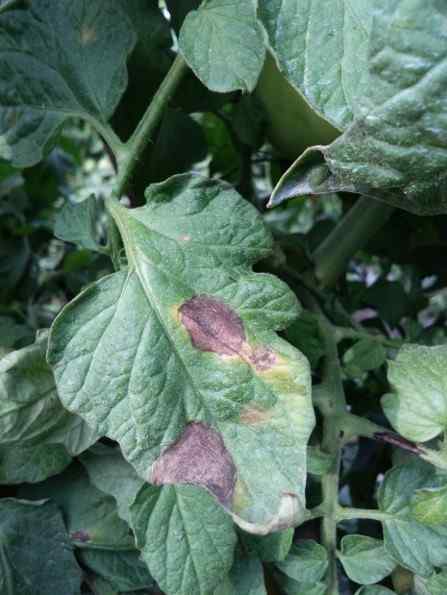
Early blight (Alternaria)
Necrotic brown spots with concentric “target” rings on older leaves; yellow halo; may reach stems and fruit.
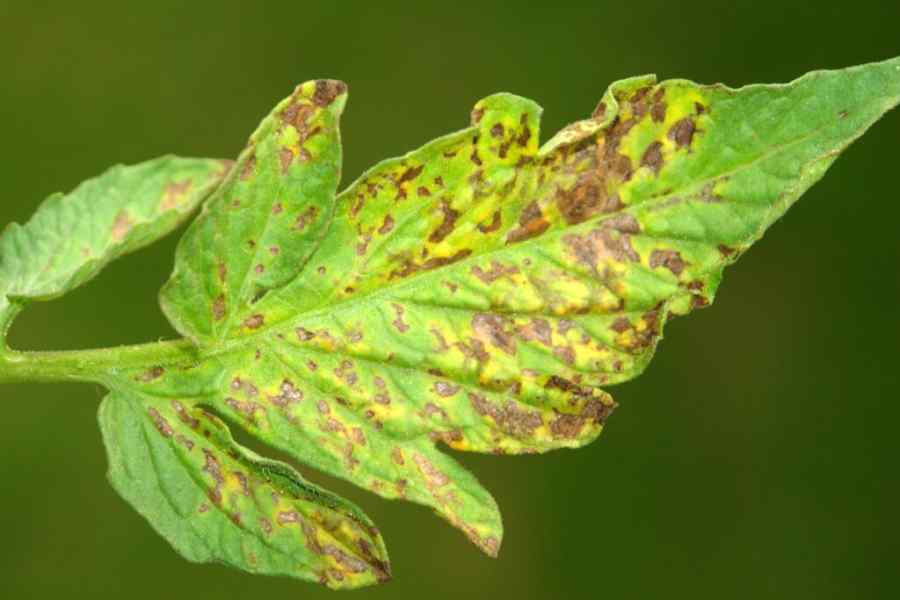
Septoria leaf spot
Small circular gray-to-tan lesions with dark margins and tiny black dots; starts on lower leaves, followed by yellowing and leaf drop.
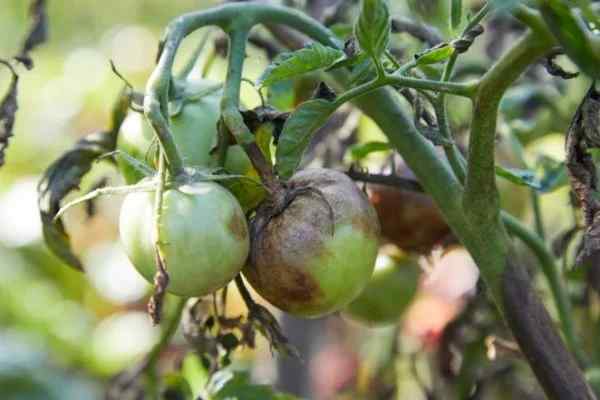
Late blight (Phytophthora infestans)
Rapidly expanding dark, water-soaked lesions on leaves and stems; white growth may appear underneath in humid weather; fruit develops dark lesions.
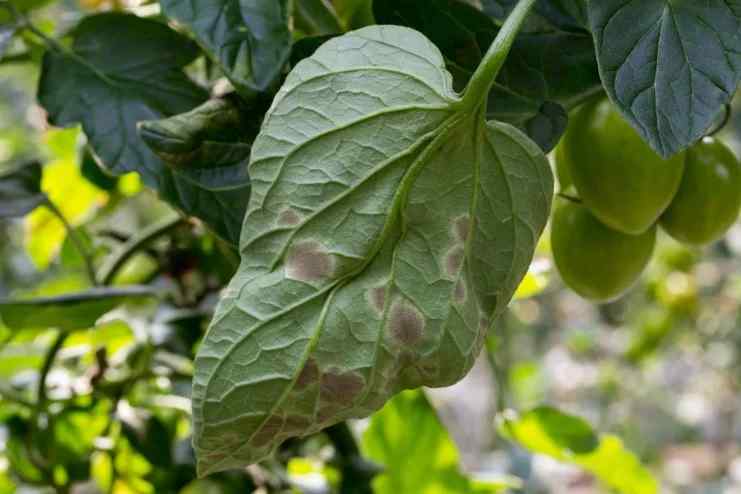
Leaf mold
Olive-green to brown velvety patches on the upper leaf surface; dense olive/gray mold on the underside; yellowing and premature leaf drop.
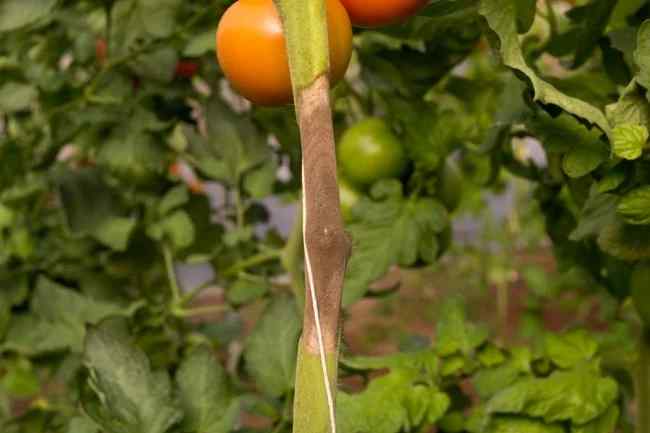
Gray mold (Botrytis)
Soft brown lesions on leaves, stems, flowers, or fruit with characteristic gray fuzzy mold; rapid rot in humid conditions.
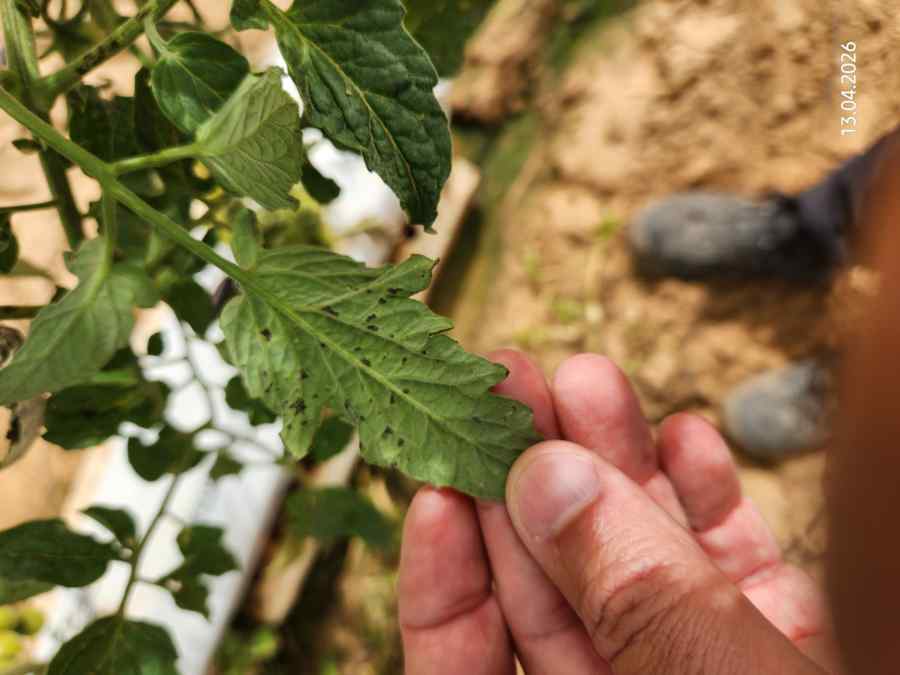
Bacterial speck
Tiny dark brown-to-black leaf spots, sometimes with a yellow halo; may also affect stems and fruit.
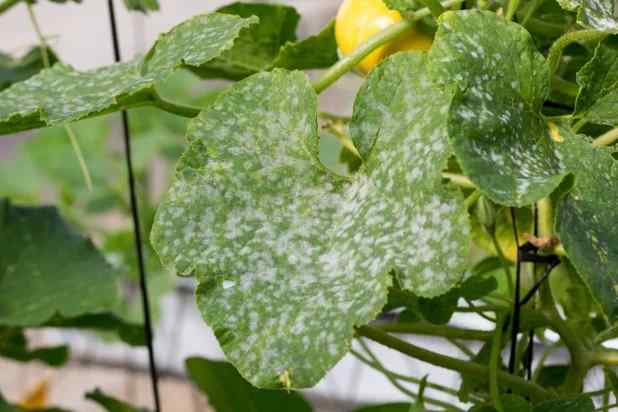
Powdery mildew
White powdery growth on leaf surfaces; leaves yellow, curl, dry, and lose vigor.
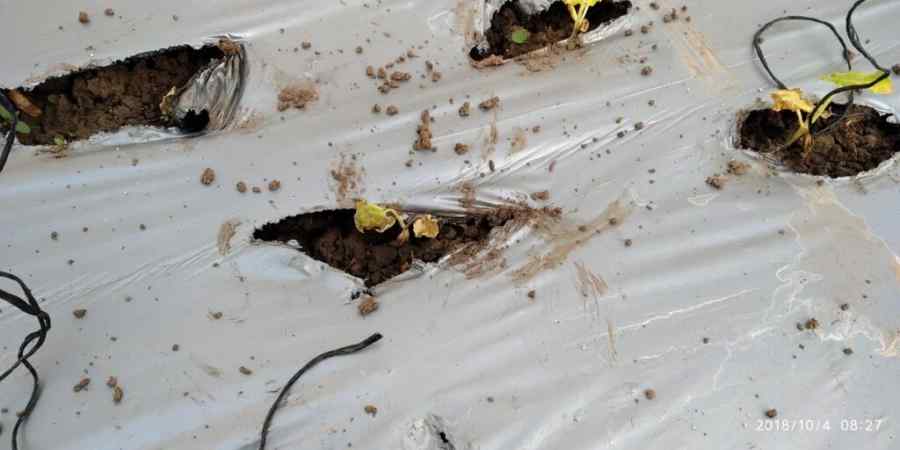
Damping-off / seedling root rot
Seedlings collapse at the soil line; basal stem is thin, brown/black, soft, and water-soaked, especially in wet media.
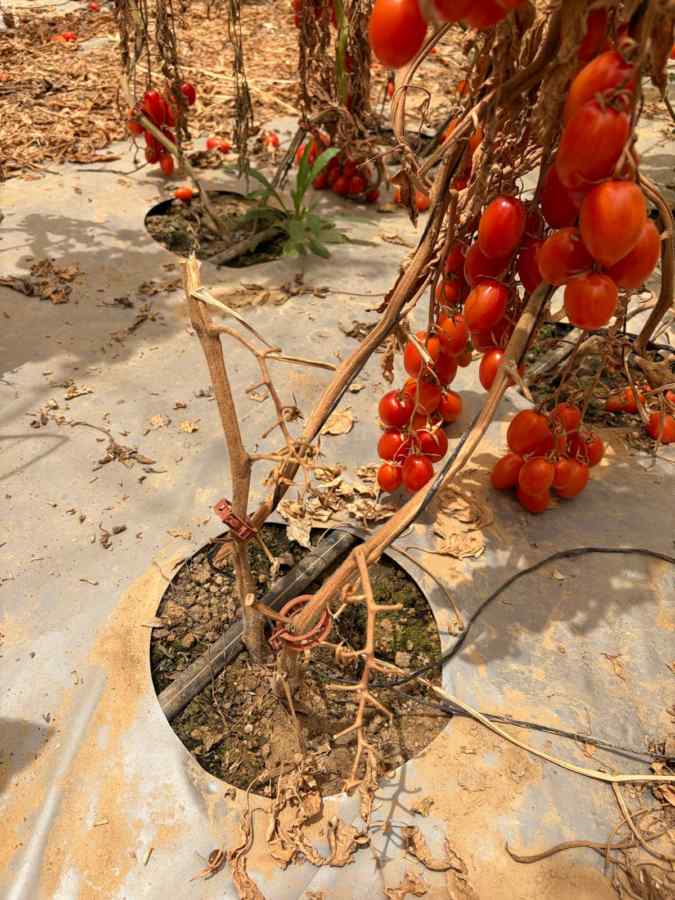
Fusarium wilt
Lower leaves yellow and plants wilt; brown vascular tissue is visible when the stem is cut.
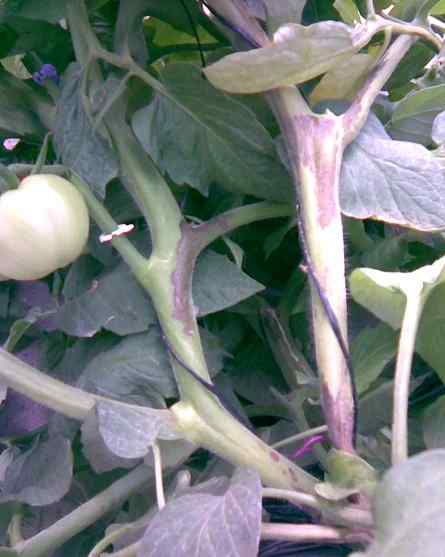
Pith necrosis
Internal stem pith becomes brown, hollow, and spongy; stunting, lower-stem lesions, and wilt may occur despite adequate soil moisture.
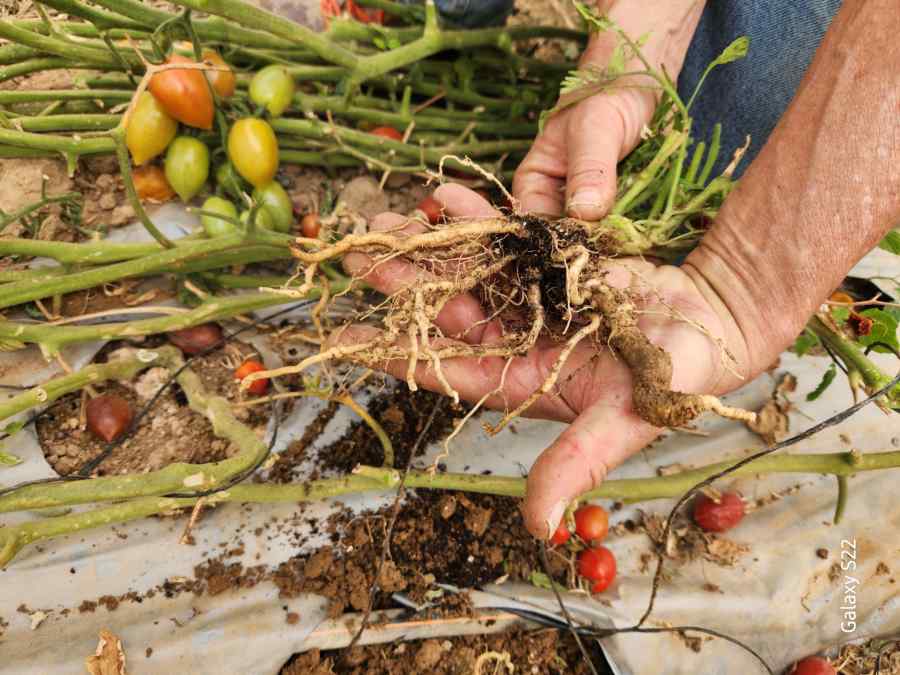
Root-knot nematodes
Roots have visible knots or galls; plants are stunted, yellow and wilt during heat even when soil is moist.
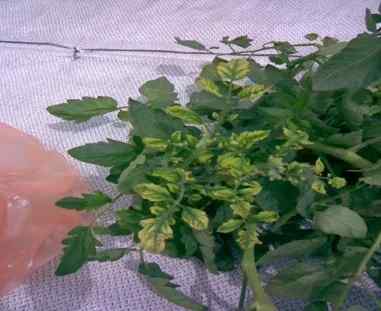
Tomato yellow leaf curl virus (TYLCV)
Young leaves yellow between veins and curl upward; plant is stunted; whiteflies may be present.
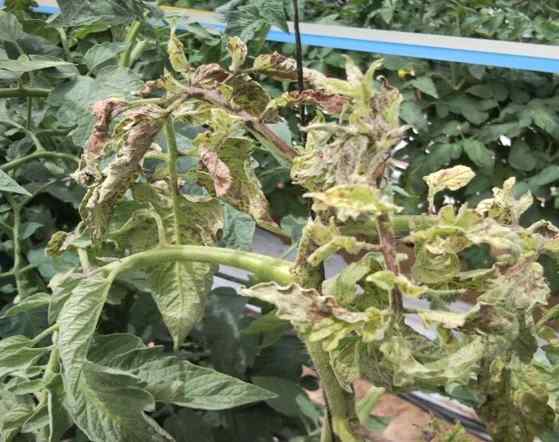
Tomato spotted wilt virus (TSWV)
Bronzing or rings on leaves and fruit; stunting or necrotic streaks; often associated with thrips.
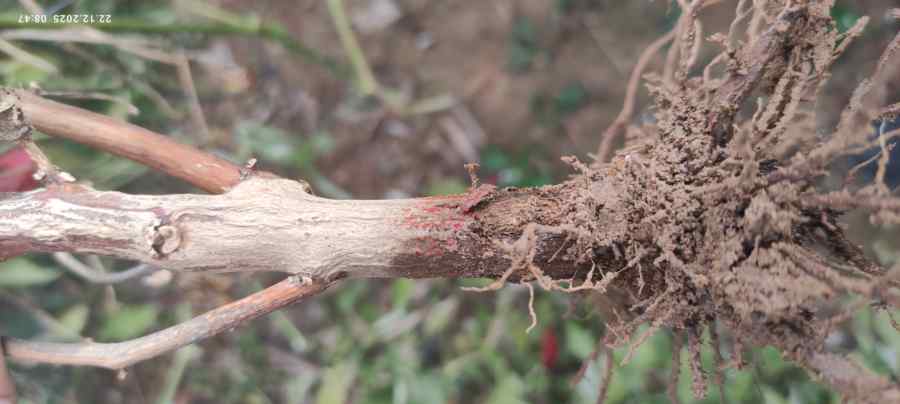
Fusarium crown and root rot
Plants are stunted and wilt; the crown and upper roots become brown, necrotic and decayed. Symptoms may overlap with other soil-borne rots.
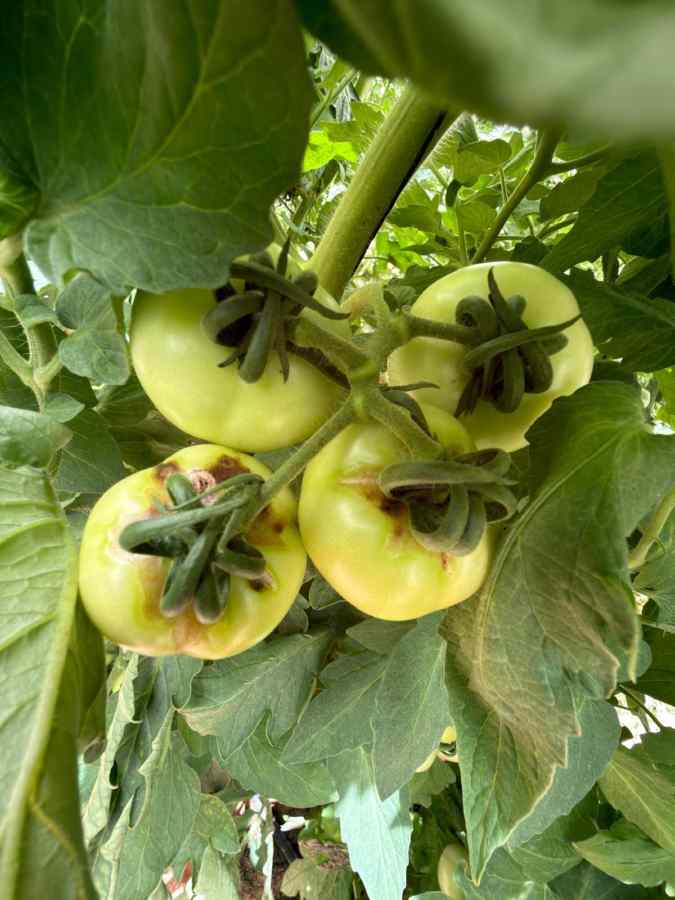
Tobamovirus diseases (TMV, ToMV, ToBRFV, etc.)
Mosaic, narrowing or distortion of leaves; fruit may show mosaic, brown or irregular discoloration.
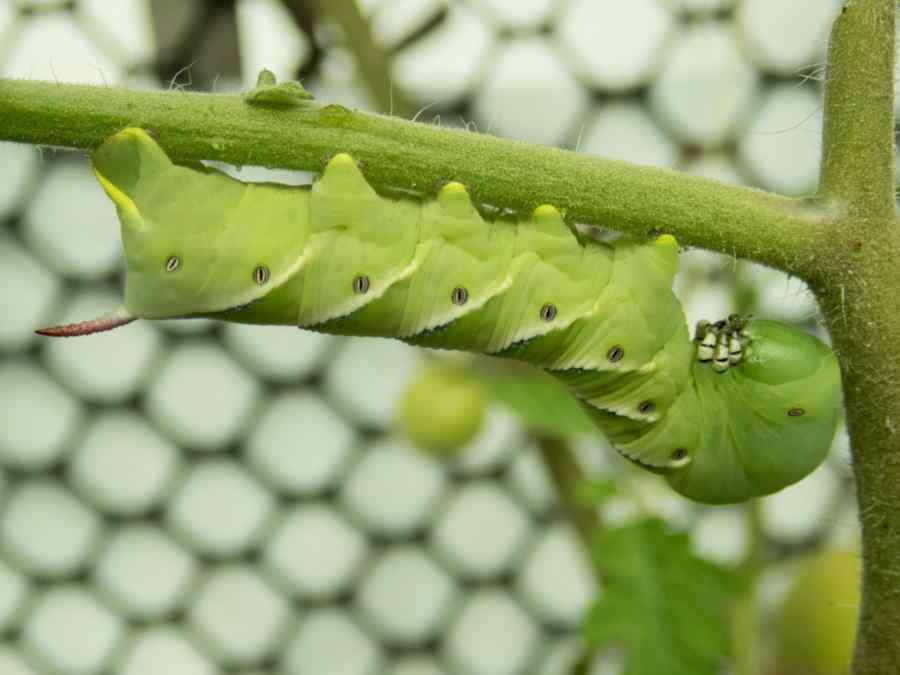
Tomato hornworm
Large green caterpillars rapidly strip foliage; dark droppings and fruit chewing may be visible.
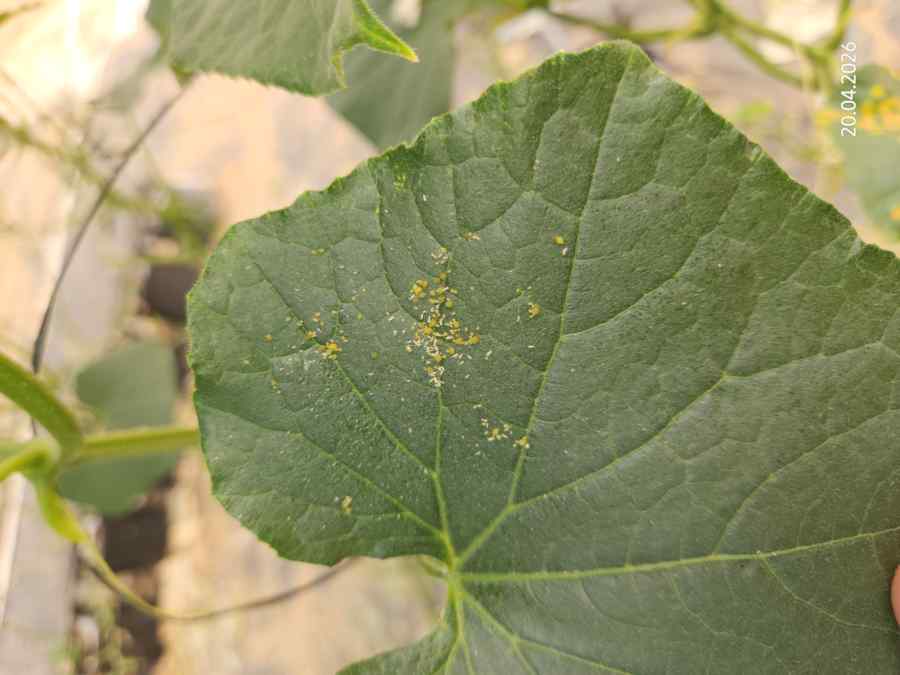
Aphids
Soft-bodied insects cluster on new growth and leaf undersides; curling, honeydew, and sooty mold occur.
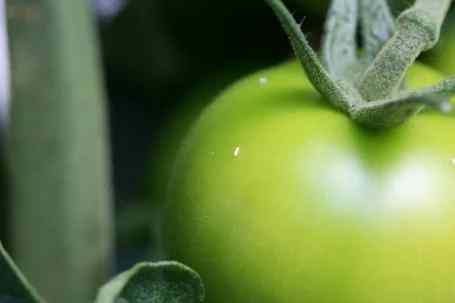
Whiteflies
Tiny white insects fly from leaf undersides when disturbed; yellowing and honeydew/sooty mold develop.
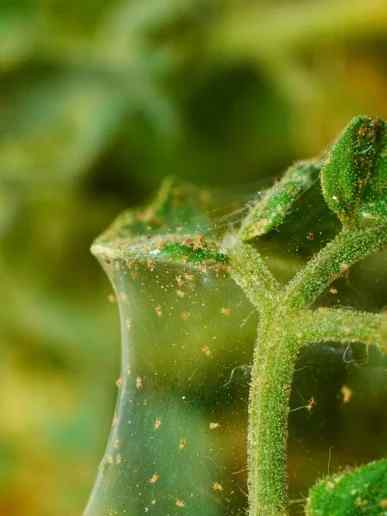
Spider mites
Fine yellow stippling, bronzing, and webbing on leaves; mites are often on the underside, worse in hot dry weather.
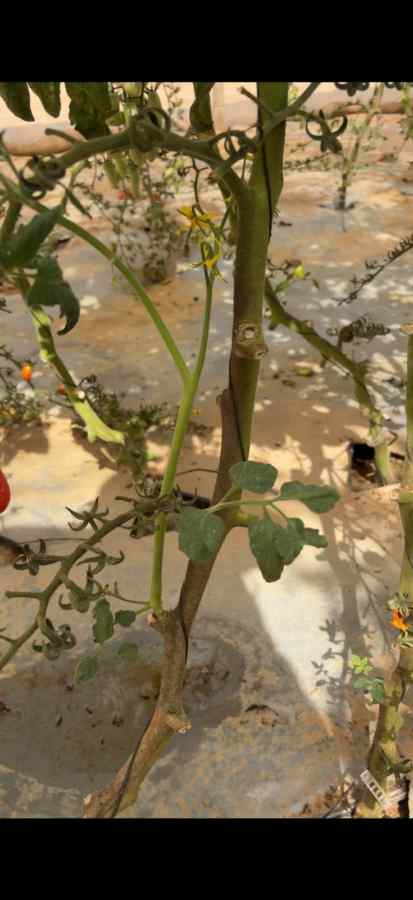
Tomato russet mite (Aculops lycopersici)
Rusty-brown, greasy, or bronzed appearance on stems and leaves, typically starting from the lower parts of the plant and moving upward; leaves dry up, curl, and wither.
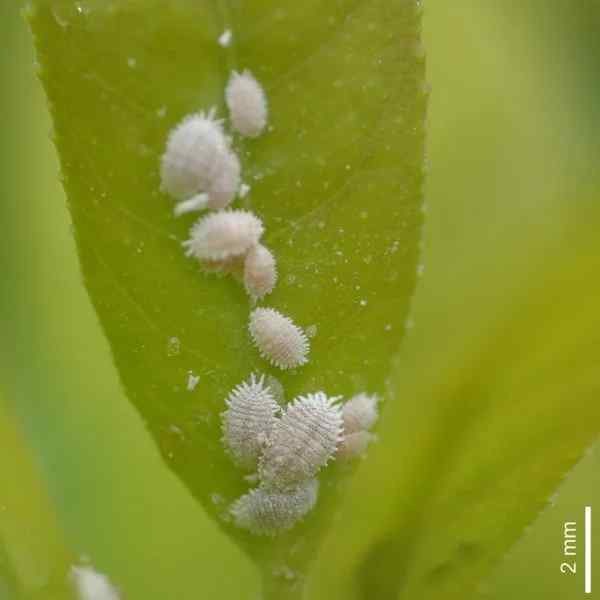
Mealybugs
White cottony clusters on stems, leaf joints, and undersides; honeydew and sooty mold may appear.
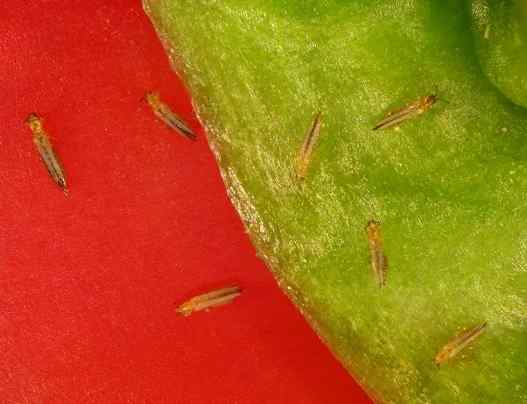
Thrips
Silvery streaks or bronzing, distorted leaves, and scarring on flowers or fruit; slender insects hide in flowers.
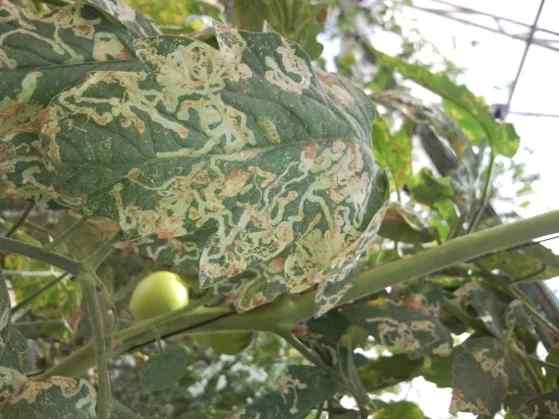
Leaf miner
Winding pale mines inside leaves; leaves turn yellow, dry, and may drop.
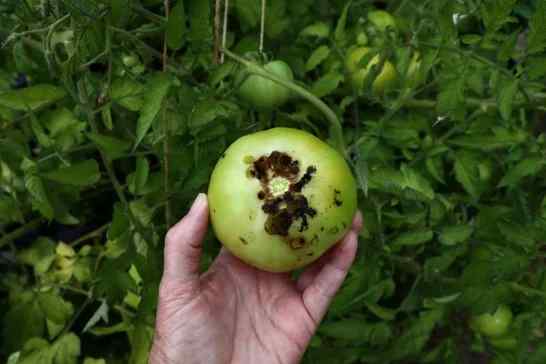
Tuta absoluta (tomato leafminer)
Larvae mine leaves and bore into stems and fruit; tunnels and frass occur; severe infestations cause defoliation and fruit loss.

Snails and slugs
Irregular holes with smooth edges; slime trails on leaves, stems, or soil; damage is worse at night.
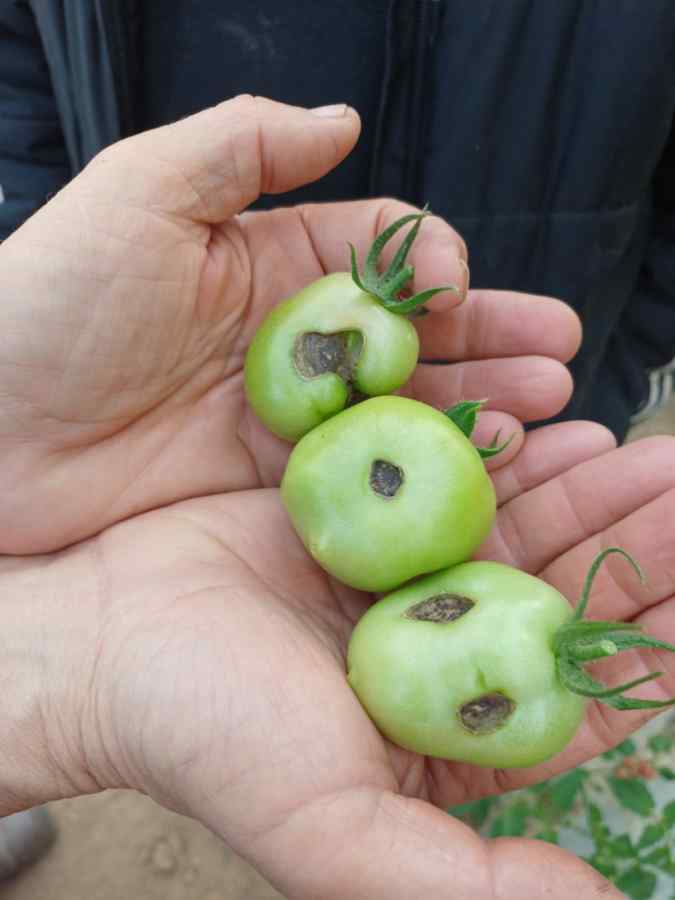
Blossom-end rot
Dark sunken leathery lesion at blossom end; associated with irregular water supply and calcium transport stress.
Catfacing
Deep scars and distorted blossom end, often after cool conditions during flowering or stress.
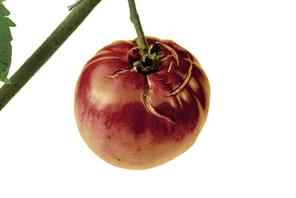
Fruit cracking
Radial or concentric cracks around the stem or shoulders; may become corky.
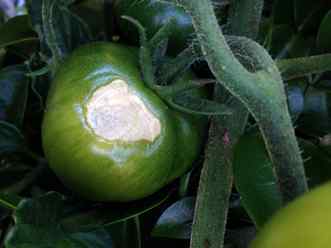
Sunscald
Pale, white, yellow, papery, or blistered patches on exposed fruit after intense sun, often after defoliation.
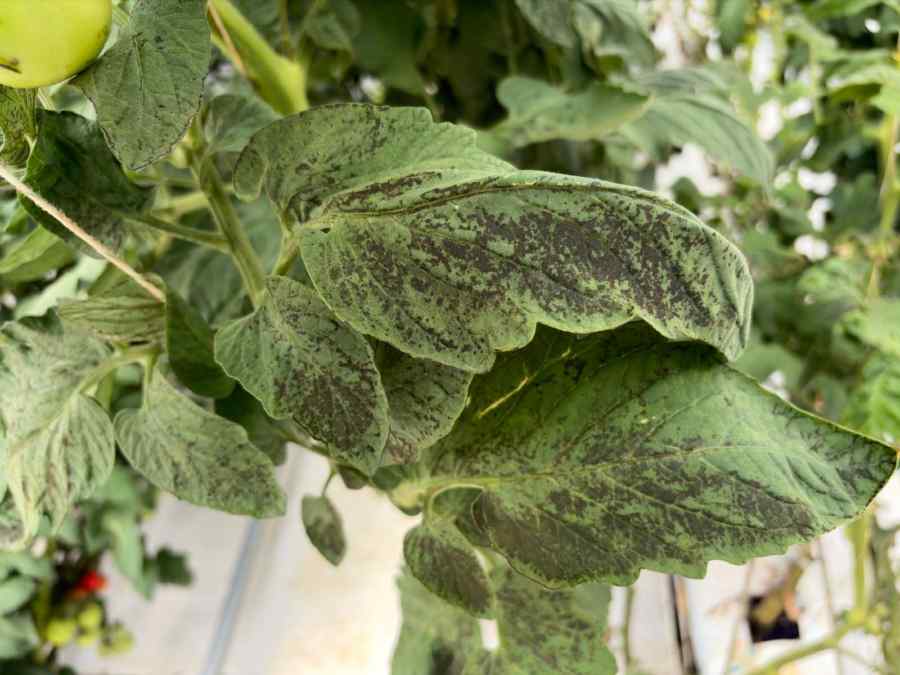
Herbicide injury
Leaves curl, twist, become narrow/strap-like, or show distorted growth after nearby herbicide application.
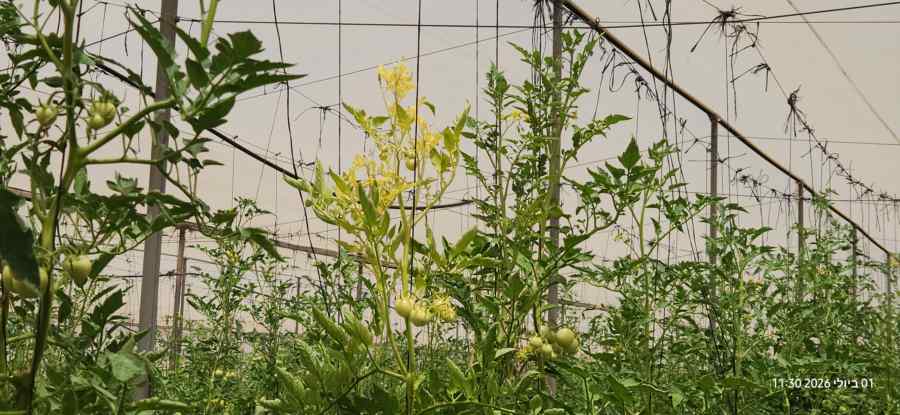
Nutrient deficiency or root-zone imbalance
Older leaves show uniform yellowing or interveinal chlorosis; growth may be slow, but no pathogen signs are present.
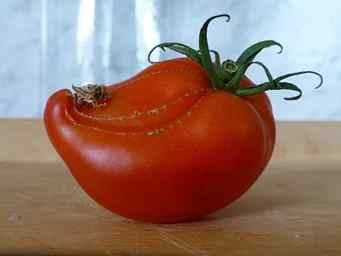
Zippering
Long, narrow corky scars extend from the blossom end or along the fruit, often with an uneven or ridged appearance.